By The Pawline veterinary teamVeterinary-reviewed by Alastair Greenway, BVM&S MRCVS · 25 July 2026
Reference range · ng/dL
0.73.7
Reference
0.7–3.7
Direction
Both unusually high and low values carry meaning.
This is the conventional reference interval. Your pet’s own report may print a slightly different range, so always read the value against that. Sign in to see your pet’s value on this strip.
Free T4 is the unbound, active fraction of thyroid hormone — the part actually available to the tissues. Because it's less swayed by unrelated illness than total T4, it's used to confirm a thyroid picture that total T4 has raised, and to see past the 'sick euthyroid' trap.
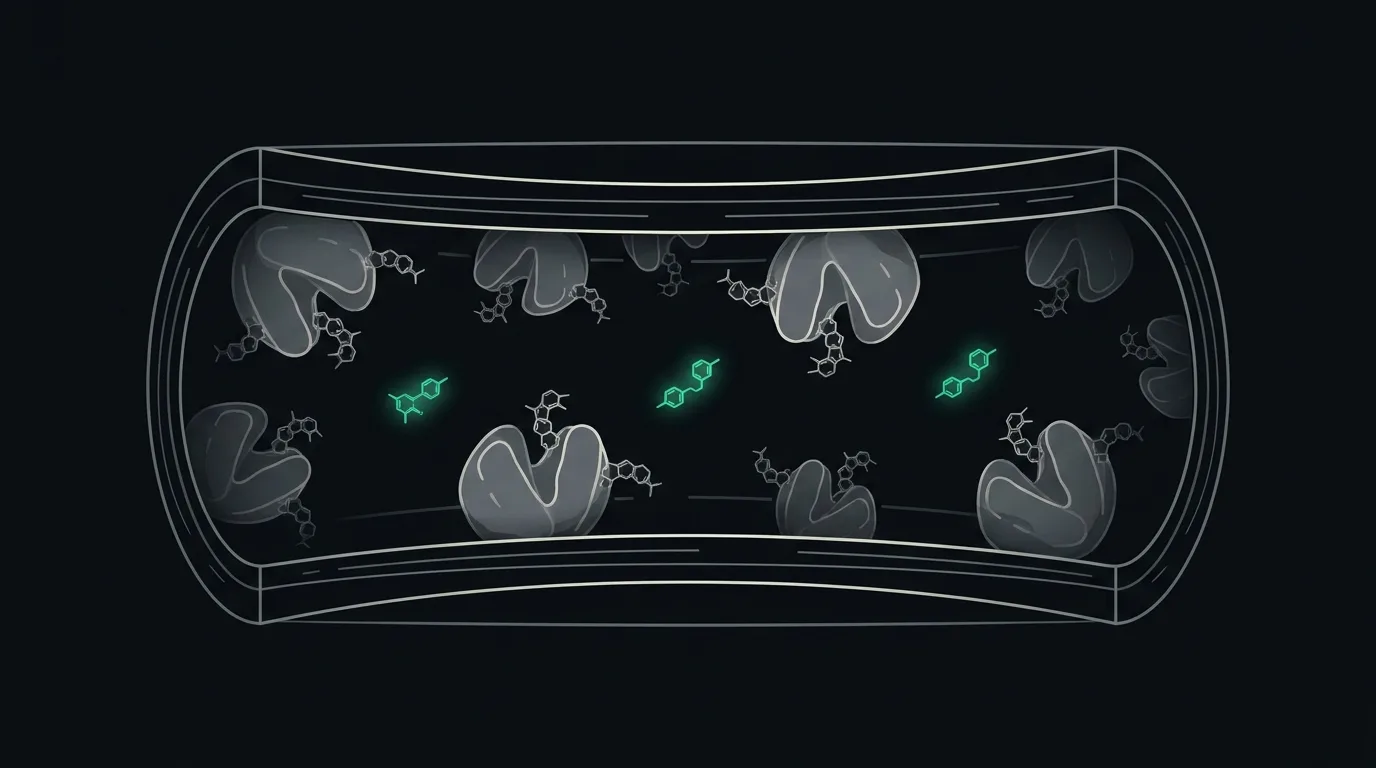
Most thyroid hormone in the blood travels bound to carrier proteins, inactive, like cargo in transit. Only a tiny free (unbound) fraction is actually available to enter tissues and act — and that free fraction is what free T4 (fT4) measures. Because it captures the active hormone rather than the total pool, free T4 is often a truer reflection of thyroid status, and it is more resistant to the distortions that can throw off total T4.
Free T4 is the small unbound, active fraction of thyroid hormone — less swayed by unrelated illness, so it helps confirm a thyroid diagnosis.
Its main job is confirmation: total T4 raises the question, free T4 helps answer it.
Reading free T4 with total T4
Free T4 is rarely a first-line test on its own; it is run to refine what total T4 suggests:
In cats suspected of hyperthyroidism: a high total T4 usually confirms it, but early or mild cases can have a borderline total T4. A high free T4 in that setting supports the diagnosis. The catch is that free T4 can be falsely raised by unrelated illness in cats, so it is interpreted with total T4, not instead of it — a high free T4 with a low-normal total T4 in a sick cat may be misleading rather than diagnostic.
In dogs suspected of hypothyroidism: the great confounder is "sick euthyroid" — unrelated illness lowering thyroid readings without true thyroid disease. Free T4 is less affected by this than total T4, so a genuinely low free T4 (alongside a low total T4 and a raised TSH) strengthens the case for real hypothyroidism, while a normal free T4 in an ill dog with a low total T4 points towards sick-euthyroid rather than thyroid disease.
So free T4's value is in distinguishing true thyroid disease from the shadows cast on total T4 by other illness.
Reading a high or low result
A high free T4 supports hyperthyroidism (cats), with the false-positive caveat above. A low free T4 supports hypothyroidism (dogs), and is more trustworthy than a low total T4 because it resists the sick-euthyroid effect. In both directions, it is read as part of a thyroid panel and the clinical picture, never as a lone number.
In chronic disease
Free T4 contributes to confirming a diagnosis and, in difficult or monitored cases, to tracking thyroid status over time alongside total T4 and TSH. Because it reflects the active hormone, it is particularly useful when total T4 and the clinical signs seem to disagree, helping resolve which to believe.
Cat vs dog
The species split mirrors total T4: free T4 helps confirm feline hyperthyroidism (watching for the illness-related false positive) and helps distinguish true canine hypothyroidism from sick-euthyroid. The assay method matters — an "equilibrium dialysis" free T4 is considered the more reliable version — and reference ranges are species-specific. In both, free T4 is a confirmatory partner to total T4, not a replacement.
How it's measured
Free T4 is measured from a blood sample, in ng/dL (US) or pmol/L (UK/SI); the equilibrium-dialysis method is the reference standard. It is interpreted alongside total T4 and TSH as a panel. Some medicines affect thyroid tests, which your vet factors in. Read the value against your own report's range.
What to do next
Free T4 is most useful when total T4 leaves the diagnosis uncertain — a borderline hyperthyroid cat, or a possibly-hypothyroid dog that is also unwell. Interpreted together with total T4 and TSH and the clinical signs, it helps confirm real thyroid disease and avoid the traps of illness-related distortion, so treatment is started for the right reason.
Reference ranges reflect conventional laboratory intervals. Always interpret against your own lab's printed range and your veterinary surgeon's judgement. A brighter optimal band is shown only where a published guideline defines one, and it is cited.
This page is educational and is not a diagnosis. Lab results are interpreted in the full clinical context by your veterinary surgeon; a single value rarely tells the whole story.