By The Pawline veterinary teamVeterinary-reviewed by Alastair Greenway, BVM&S MRCVS · 25 July 2026
Reference range · ng/L
250900
Reference
250–900
Direction
Lower values are the concern.
This is the conventional reference interval. Your pet’s own report may print a slightly different range, so always read the value against that. Sign in to see your pet’s value on this strip.
B12 is a vitamin absorbed in the lower gut, so a low level can signal a gut or microbiome problem — and, unusually for a lab finding, it's one you can often correct directly with supplementation. That makes a low B12 both a useful clue and an actionable one.
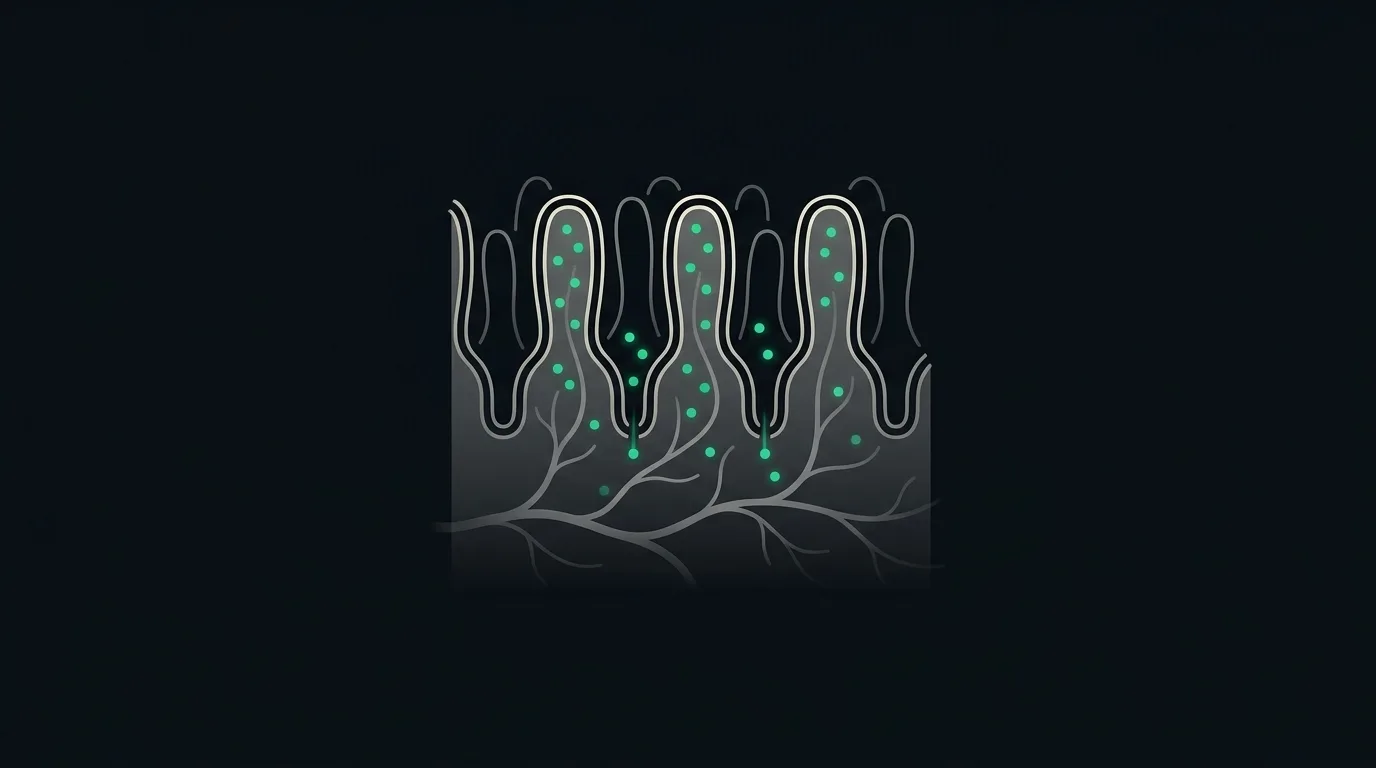
Cobalamin (vitamin B12) has to travel a surprisingly elaborate route to be absorbed: it needs the right proteins from the stomach and pancreas, and it is finally taken up in a specific stretch of the lower small intestine (the ileum). Because so many steps depend on a healthy gut and pancreas, the blood B12 level is a sensitive read-out of whether that machinery is working — and a low value is one of the more informative gut findings, not least because it can be put right.
B12 is absorbed in the lower small intestine, so a low level points to a gut or pancreatic problem — and is one of the more directly correctable findings.
Reading a low result
A low B12 (hypocobalaminaemia) points towards a problem in the gut or pancreas interfering with absorption:
Chronic intestinal disease — inflammatory bowel disease and related conditions damage the absorptive lining.
Exocrine pancreatic insufficiency (EPI) — without pancreatic factors, B12 cannot be absorbed; read alongside TLI.
Small-intestinal dysbiosis — an altered gut microbiome, where bacteria compete for the vitamin.
What makes a low B12 especially worth catching is that it is supplementable: correcting it (by injection or, increasingly, by mouth) both relieves the deficiency and removes one obstacle to the gut healing. Reading it with folate helps localise the problem, because the two vitamins are absorbed in different parts of the intestine.
Reading a high or normal result
A normal B12 is reassuring about lower-gut absorption. A high B12 is usually of little concern on its own (often reflecting supplementation). As with any single value, a normal B12 does not exclude gut disease entirely, which is why it is read as part of the gastrointestinal picture rather than alone.
In chronic disease
B12 is valuable both as a marker and a target in chronic gut disease. A persistently low or falling B12 signals ongoing malabsorption; watching it recover with supplementation and treatment of the underlying condition is a tangible sign of progress. Because chronic gut disease can quietly deplete B12 over months, tracking it over time catches a deficiency that a single snapshot might miss.
Cat vs dog
B12 is interpreted the same way in both species, with cats often showing more dramatic deficiencies in chronic intestinal disease, where low B12 is a common and important finding. Feline reference ranges run higher than canine. In both, low B12 is a signal to look at the gut and pancreas — and an opportunity to correct something directly.
How it's measured
B12 is measured from a blood sample, ideally fasted, at a laboratory that runs the gastrointestinal panel, reported in ng/L (or pmol/L). It is usually run together with folate (and often TLI and pancreatic lipase) so the results can be read as a set. Read the value against your own report's range.
What to do next
A low B12 is a prompt to investigate the gut and pancreas with your vet — and, importantly, to correct the deficiency with supplementation while the underlying cause is addressed. Tracking B12 alongside folate and the pancreatic markers, and watching it recover, is a satisfyingly concrete part of managing chronic gastrointestinal disease.
Reference ranges reflect conventional laboratory intervals. Always interpret against your own lab's printed range and your veterinary surgeon's judgement. A brighter optimal band is shown only where a published guideline defines one, and it is cited.
This page is educational and is not a diagnosis. Lab results are interpreted in the full clinical context by your veterinary surgeon; a single value rarely tells the whole story.