By The Pawline veterinary teamVeterinary-reviewed by Alastair Greenway, BVM&S MRCVS · 25 July 2026
Reference range · mg/dL
0.51.8
Reference
0.5–1.8
Direction
Higher values are the concern.
This is the conventional reference interval. Your pet’s own report may print a slightly different range, so always read the value against that. Sign in to see your pet’s value on this strip.
Creatinine is a muscle waste product cleared by the kidneys, so a raised level points to reduced kidney filtration. It's a late signal (it only climbs once a large share of kidney function is already lost), so it's read alongside SDMA and urine concentration, and the trend over time matters more than a single figure.
Creatinine is produced at a fairly steady rate as muscle uses energy, released into the blood, and then cleared almost entirely by the kidneys. Because production is roughly constant, the amount left circulating reflects how well the kidneys are filtering (the glomerular filtration rate, or GFR). When filtration falls, creatinine backs up and the blood level rises.
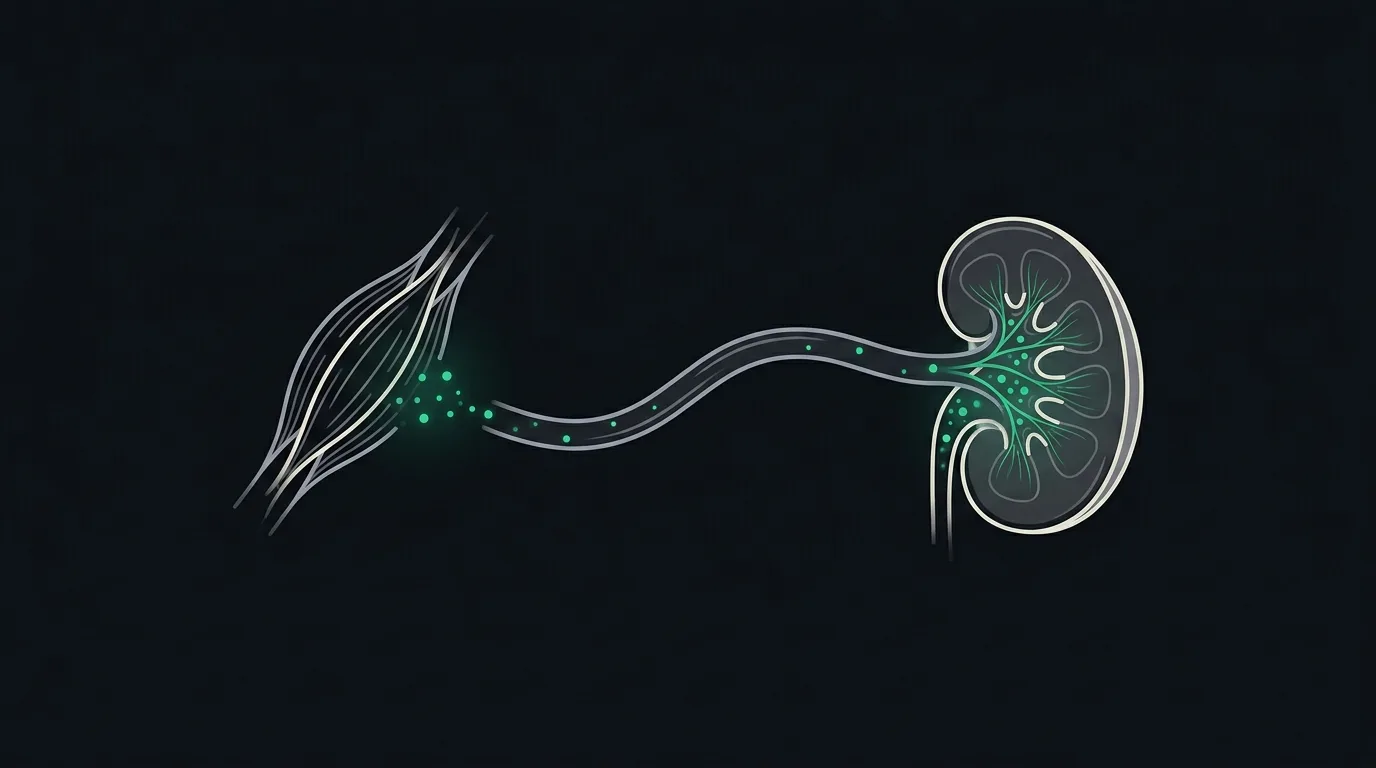
Creatinine is a steady by-product of muscle activity, cleared by the kidneys, so its blood level rises when filtration falls.
Creatinine has been the traditional kidney number for decades, but it has a well-known blind spot: it is insensitive early on. The blood level often stays within the reference range until roughly two-thirds to three-quarters of functioning kidney tissue has been lost. That is why modern kidney assessment pairs it with SDMA, which rises earlier, and with urine tests. No single marker tells the whole story.
Reading a high result
A raised creatinine indicates reduced clearance, but the reason sits in one of three places, and telling them apart matters:
Before the kidney (pre-renal): dehydration or reduced blood flow means less blood is filtered. This is common and often quickly reversible with fluids.
The kidney itself (renal): genuine loss of functioning kidney tissue, acute or chronic.
After the kidney (post-renal): an obstruction or rupture in the urinary tract. This is urgent, especially in a blocked cat.
Because of this, a high creatinine is always interpreted with hydration status, urine concentration (USG), SDMA and the clinical picture. A well-hydrated pet with concentrated urine and a high creatinine points at the kidney; a dehydrated one may simply need fluids and a recheck.
One important species nuance: creatinine is tied to muscle mass. A lean, elderly, or muscle-wasted animal produces less creatinine, so the value can look reassuringly "normal" even as filtration declines. It is a trap SDMA helps avoid.
Reading a low or normal result
A normal creatinine is reassuring but, given its insensitivity, does not rule out early kidney disease, which is the whole reason SDMA and urine concentration are measured alongside it. A low creatinine usually reflects low muscle mass (a small, young, or thin animal) and is rarely a concern in itself.
In chronic kidney disease
Creatinine is central to how kidney disease is staged and monitored once it is established. The International Renal Interest Society (IRIS) uses stable, fasted creatinine values to assign a CKD stage, which in turn guides treatment (IRIS, 2023). Its late-rising nature, unhelpful for early detection, becomes useful here: in a diagnosed patient, a steadily climbing creatinine is a clear, trackable measure of progression, and a value that holds steady is reassuring evidence that management is working.
The key discipline is to compare like with like (the same lab, a well-hydrated and fasted patient), because hydration and a recent meal both nudge the number. Judged that way, the creatinine trend line is one of the most useful tools in following a kidney patient over months and years.
Cat vs dog
Creatinine is used the same way in both species, with cat reference ranges running a little higher than dogs'. The muscle-mass caveat is especially important in older cats, who commonly lose muscle as they age and develop CKD at the same time, so a "normal" creatinine in a thin senior cat can lag well behind the true state of the kidneys. This is a major reason SDMA has become routine in feline senior screening.
How it's measured
Creatinine is measured on a routine blood chemistry panel, reported in mg/dL (US) or µmol/L (UK/SI). A light fast and good hydration give the most reliable value, and the same-lab trend is more informative than comparing an isolated number between laboratories. Always read the result against the reference range printed on your report.
What to do next
If your pet's creatinine is raised, the useful next steps with your vet are to check hydration, run a urine sample (concentration and UPC), and look at SDMA. If the kidney is confirmed, the next step is to stage and monitor over time. A single high value on a dehydrated or recently-fed animal is often rechecked before any conclusion is drawn; it is the confirmed, fasted trend that tells the real story.
Reference ranges reflect conventional laboratory intervals. Always interpret against your own lab's printed range and your veterinary surgeon's judgement. A brighter optimal band is shown only where a published guideline defines one, and it is cited.
This page is educational and is not a diagnosis. Lab results are interpreted in the full clinical context by your veterinary surgeon; a single value rarely tells the whole story.