By The Pawline veterinary teamVeterinary-reviewed by Alastair Greenway, BVM&S MRCVS · 25 July 2026
Reference range · mg/dL
727
Reference
7–27
Direction
Higher values are the concern.
This is the conventional reference interval. Your pet’s own report may print a slightly different range, so always read the value against that. Sign in to see your pet’s value on this strip.
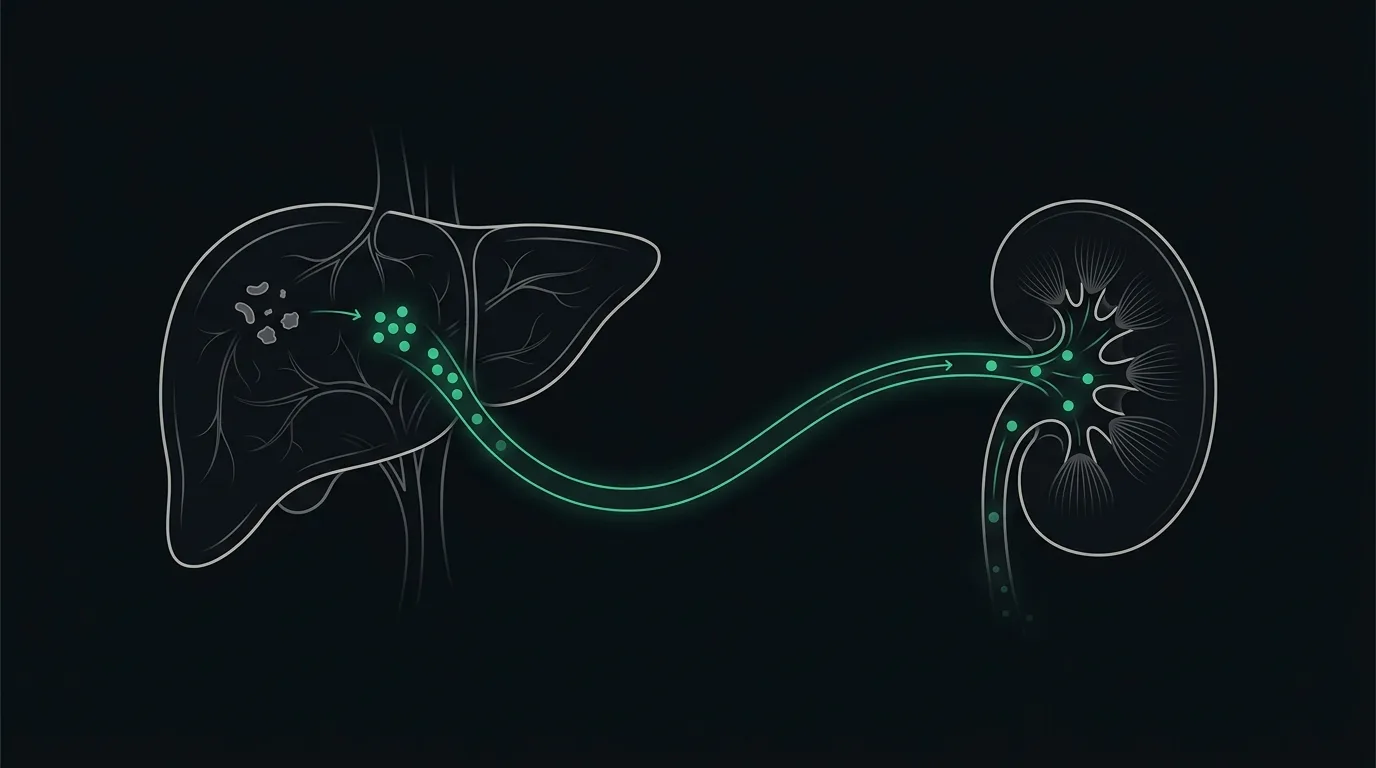
Urea is a protein waste product the liver makes and the kidneys clear, so a raised level can reflect reduced kidney filtration. But it's easily swayed by hydration, diet and gut bleeding, so it's interpreted alongside creatinine and SDMA rather than on its own.
Urea (measured as blood urea nitrogen, or BUN) is the end-product of protein breakdown. The liver makes it from the ammonia produced when the body processes protein, and the kidneys clear most of it. Because it is both produced and excreted, urea sits at the crossroads of several systems — which makes it useful, but also easily misread if taken alone.
Urea is made by the liver from protein breakdown and cleared by the kidneys — so it reflects both, and is swayed by diet and hydration.
Reading a high result
A raised urea (azotaemia) can point to the kidneys, but several non-kidney factors push it up too, and separating them is the whole skill of reading it:
Dehydration / reduced kidney blood flow — the most common cause of a mildly high urea; it usually falls with fluids.
A high-protein meal shortly before sampling, which is why a fasted sample is preferred.
Bleeding into the gut, where digested blood is a protein load that raises urea — a useful clue in itself.
Reduced kidney filtration, the finding that matters most, especially when creatinine and SDMA are also raised and the urine is dilute.
Because urea moves for so many reasons, it is most informative in company. Urea and creatinine rising together with dilute urine builds a kidney picture; urea up with a normal creatinine points more towards dehydration, diet, or gut bleeding.
Reading a low or normal result
A low urea is usually of little concern and can accompany a low-protein diet, increased drinking and urination, or reduced liver production — the liver makes urea, so advanced liver dysfunction or a portosystemic shunt can lower it (read alongside ALT and bile acids). A normal urea, like a normal creatinine, does not by itself exclude early kidney disease.
In chronic kidney disease
In established kidney disease urea tracks broadly with creatinine and rises as the disease advances, and a high urea is part of what produces the clinical signs of uraemia — nausea, poor appetite, mouth ulcers — when the kidneys can no longer clear waste. But because hydration and diet shift it so readily, creatinine and SDMA are the steadier numbers for staging and trend-tracking; urea adds context, particularly about hydration and how the patient is feeling, rather than being the primary yardstick.
Cat vs dog
Urea is interpreted the same way in dogs and cats, with feline reference ranges running higher. The same cautions apply in both — hydration and diet first, then the kidney picture. In cats, the frequent combination of dilute urine and rising urea and creatinine is a common presentation of the CKD that is so prevalent in the species.
How it's measured
Urea is measured on a routine blood chemistry panel — in the UK often reported directly as "urea" in mmol/L, in the US as BUN in mg/dL (the two describe the same thing on different scales). A fasted, well-hydrated sample is most reliable. As always, read the value against your own report's reference range and follow the same-lab trend.
What to do next
A mildly raised urea on a well pet is often addressed simply by checking hydration and rechecking a fasted sample. A urea that stays up alongside a raised creatinine, SDMA and dilute urine warrants the fuller kidney work-up with your vet; a high urea with normal creatinine may instead point at hydration, diet, or a gut bleed worth investigating.
Reference ranges reflect conventional laboratory intervals. Always interpret against your own lab's printed range and your veterinary surgeon's judgement. A brighter optimal band is shown only where a published guideline defines one, and it is cited.
This page is educational and is not a diagnosis. Lab results are interpreted in the full clinical context by your veterinary surgeon; a single value rarely tells the whole story.