Serum bile acids · SBA · Pre/postprandial bile acids
By The Pawline veterinary teamVeterinary-reviewed by Alastair Greenway, BVM&S MRCVS · 25 July 2026
Reference range · µmol/LDogs & cats
025
Reference
0–25
Direction
Higher values are the concern.
This is the conventional reference interval. Your pet’s own report may print a slightly different range, so always read the value against that. Sign in to see your pet’s value on this strip.
Bile acids test how well the liver is actually working — its function — rather than whether liver cells are leaking enzymes. That means they can flag reduced liver function or a portosystemic shunt even when ALT and ALP look normal, which makes them a powerful second-line liver test.
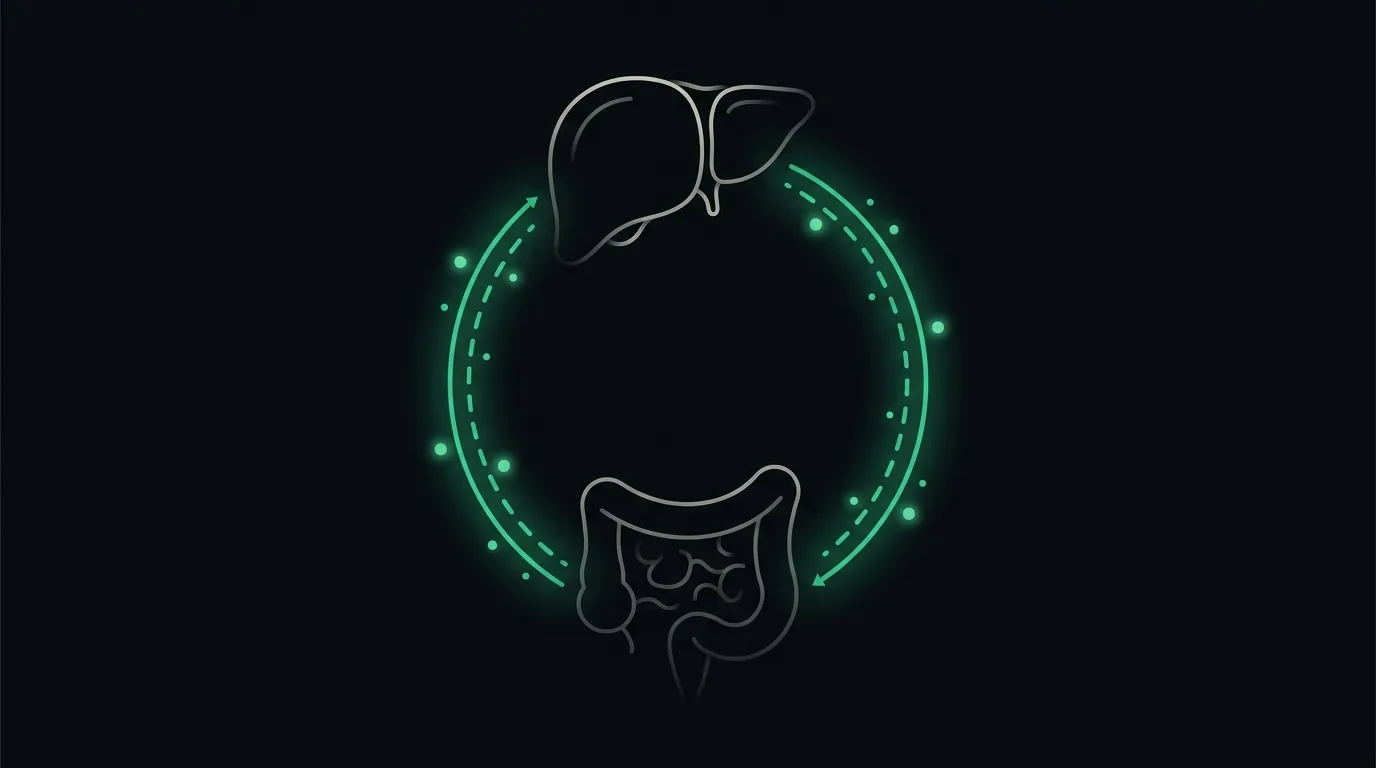
Most of the liver panel measures leakage (enzymes escaping from injured cells) or bile flow. Bile acids are different: they test function — whether the liver is doing its actual job. The liver makes bile acids, releases them into the gut to help digest fat, and then efficiently reclaims them from the blood as they circulate back — a tight recycling loop. A healthy liver keeps the blood level of bile acids low by clearing them so effectively. When the liver's function is impaired, or when blood bypasses it through an abnormal vessel, that clearance fails and bile acids rise.
The liver recycles bile acids from gut back to blood. A raised level means the liver isn't clearing them — a test of function, not enzyme leakage.
This is why bile acids can reveal a liver problem that the enzymes miss entirely.
The pre- and post-meal pair
Bile acids are usually measured as a pair: a fasted sample, then a second sample two hours after a small meal. The meal deliberately triggers the gallbladder to release bile acids, stress-testing the liver's ability to reclaim them. The 2-hour post-meal (postprandial) value is the more sensitive and meaningful figure — a liver that copes with the fasting level may still fail the post-meal challenge.
Reading a high result
A raised bile-acid level — particularly the postprandial value — indicates hepatobiliary dysfunction or a portosystemic shunt:
A portosystemic shunt is an abnormal vessel that lets blood bypass the liver, so bile acids (and other toxins) are not cleared. This is the classic reason to run bile acids in a young animal with vague signs, poor growth, or odd neurological episodes after eating — often with normal or only mildly abnormal enzymes.
Reduced liver function from chronic liver disease, cirrhosis, or significant loss of working liver tissue.
Because a raised value points to a functional problem, it often prompts imaging (to look for a shunt or characterise the liver) rather than just repeating enzymes.
Reading a normal result
Normal bile acids (both fasting and post-meal) are strong evidence that the liver's core function and its blood supply are intact, which is very reassuring — it effectively argues against a significant shunt and against major loss of liver function. This makes bile acids a valuable test for ruling out those serious problems in a suspicious patient.
In chronic disease
In known liver disease, bile acids help gauge how much functional reserve remains and can be tracked as one measure of whether function is deteriorating or holding. Because they report on the job the liver is actually doing, they complement the enzymes (which report on injury) to give a fuller picture of a chronic liver patient over time.
Cat vs dog
Bile acids are used the same way in both species, with a similar postprandial cut-off, and are the standard non-invasive test for portosystemic shunts in each — shunts occur in both dogs and cats, sometimes in specific breeds. One feline caveat: cats can have concurrent gallbladder factors that occasionally complicate interpretation, so results are read in context. In both, the fasted-and-post-meal pair, with emphasis on the 2-hour value, is the meaningful test.
How it's measured
Bile acids are measured on a blood sample, in µmol/L, ideally as the paired fasted and 2-hour postprandial samples. The small meal between them must actually stimulate the gallbladder, so the protocol matters. Read the values against your own report's ranges, with attention to the postprandial figure.
What to do next
Bile acids are the go-to test when a liver functional problem or a shunt is suspected — vague illness in a young animal, or a liver that seems abnormal despite unremarkable enzymes. A raised value, especially post-meal, typically leads to liver imaging with your vet to look for a shunt or characterise the disease; a normal pair provides strong reassurance against those serious diagnoses.
Reference ranges reflect conventional laboratory intervals. Always interpret against your own lab's printed range and your veterinary surgeon's judgement. A brighter optimal band is shown only where a published guideline defines one, and it is cited.
This page is educational and is not a diagnosis. Lab results are interpreted in the full clinical context by your veterinary surgeon; a single value rarely tells the whole story.