By The Pawline veterinary teamVeterinary-reviewed by Alastair Greenway, BVM&S MRCVS · 25 July 2026
Reference range · U/L
011
Reference
0–11
Direction
Higher values are the concern.
This is the conventional reference interval. Your pet’s own report may print a slightly different range, so always read the value against that. Sign in to see your pet’s value on this strip.
GGT is an enzyme that points more specifically at the bile system than ALP, so a rise here helps separate liver-and-bile changes from the bone and steroid effects that also lift ALP. It's usually read as a partner to ALP and ALT rather than on its own.
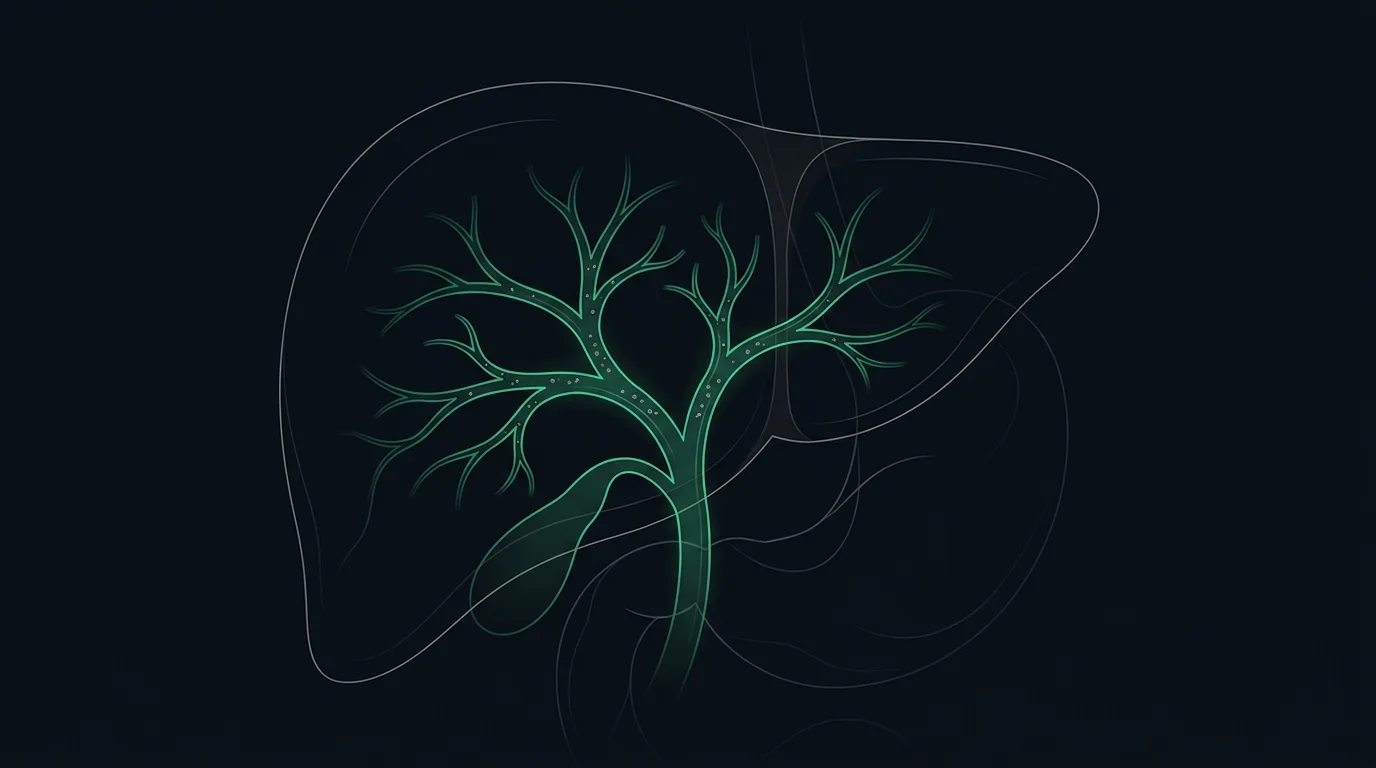
GGT (gamma-glutamyl transferase) is an enzyme concentrated in the cells lining the bile ducts and the liver's bile-handling machinery. When bile flow is obstructed or the bile system is inflamed, GGT rises. Its value lies in being more specific to the hepatobiliary system than ALP: GGT does not have ALP's large bone and steroid-driven fractions, so it helps decide whether a raised ALP is really about the liver and bile.
GGT sits in the bile-duct lining, so a rise points more specifically at the bile system than ALP does.
Reading a high result
A raised GGT points towards the bile system (cholestasis) — impeded bile flow, bile-duct inflammation, gallbladder disease, or liver disease involving the ducts. Its main working role is as a tie-breaker: when ALP is up, a concurrently raised GGT supports a genuine hepatobiliary cause, whereas a high ALP with a normal GGT leans towards the non-liver causes of ALP (steroids, bone). Read with ALT and bilirubin, GGT helps build a coherent liver picture.
Reading a low or normal result
GGT normally sits low, so a normal or undetectable value is the usual state and is reassuring about the bile system. A normal GGT alongside a raised ALP is itself informative — it nudges the interpretation away from bile-duct disease and towards ALP's other causes.
In chronic liver disease
In chronic and cholestatic liver disease, GGT is useful for characterising and monitoring bile-system involvement over time. A persistently high or rising GGT with a rising ALP and bilirubin describes an ongoing cholestatic process; a falling GGT tracks its resolution. Because it moves alongside ALP but from a more specific source, GGT adds confidence to the trend rather than duplicating it.
Cat vs dog
In cats, GGT is a particularly valuable liver marker. Feline ALP has a short half-life and rises modestly, so in some feline liver diseases GGT rises more than ALP and can be the more sensitive bile-system signal — with one classic exception, hepatic lipidosis, where ALP tends to rise markedly while GGT stays relatively low. That ALP-high/GGT-low pattern is itself a useful pointer. In dogs, GGT's main job remains helping interpret a raised ALP.
How it's measured
GGT is measured on a routine chemistry panel, reported in U/L. No special preparation is required. Reference ranges are low and vary by lab, so read the value against your own report and follow the same-lab trend, always alongside ALP, ALT and bilirubin.
What to do next
Because GGT is rarely interpreted in isolation, the useful step when it is raised is to look at the whole liver panel with your vet — ALP, ALT and bilirubin — and, where a cholestatic picture emerges, to image the liver and gallbladder. The ALP-and-GGT pattern together often does more to localise a problem than either enzyme alone.
Reference ranges reflect conventional laboratory intervals. Always interpret against your own lab's printed range and your veterinary surgeon's judgement. A brighter optimal band is shown only where a published guideline defines one, and it is cited.
This page is educational and is not a diagnosis. Lab results are interpreted in the full clinical context by your veterinary surgeon; a single value rarely tells the whole story.