By The Pawline veterinary teamVeterinary-reviewed by Alastair Greenway, BVM&S MRCVS · 25 July 2026
Reference range · g/dL
2.54.5
Reference
2.5–4.5
Direction
Both unusually high and low values carry meaning.
This is the conventional reference interval. Your pet’s own report may print a slightly different range, so always read the value against that. Sign in to see your pet’s value on this strip.
Globulins are largely antibodies, so a persistently raised value reflects chronic immune stimulation or inflammation, while a low value can signal an antibody or protein-loss problem. Read with albumin, globulin helps tell an immune process from a simple protein leak.
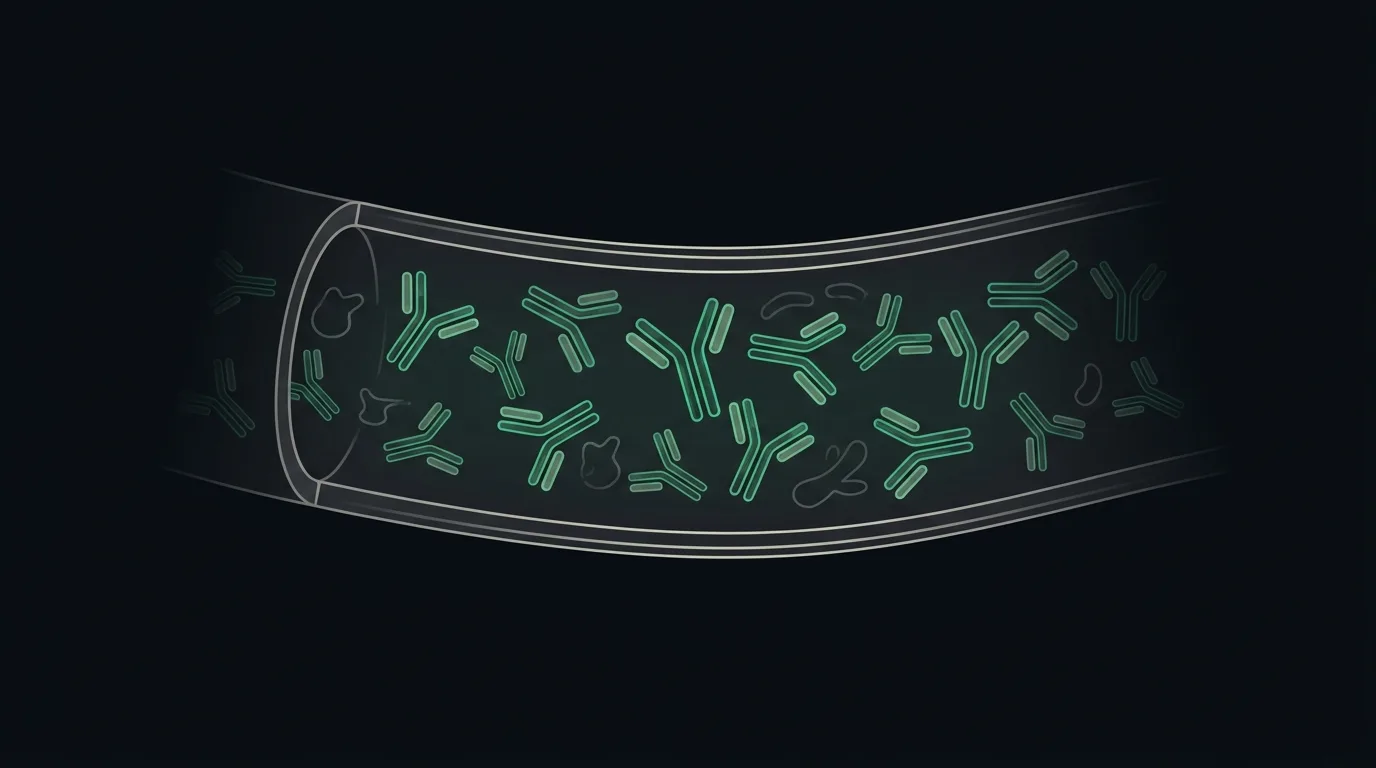
Globulins are the second great class of blood protein after albumin. Unlike albumin (a single protein made by the liver), "globulin" is a mixed family — carrier proteins, clotting factors, inflammatory proteins, and, above all, antibodies (immunoglobulins) produced by the immune system. Because antibodies dominate the fraction, the globulin level is in large part a readout of immune activity: chronic stimulation drives it up, and a failure of antibody production or a leak drives it down.
Globulins are largely antibodies, so a raised value reflects chronic immune stimulation, while a low value signals an antibody or protein-loss problem.
Globulin is usually calculated (total protein minus albumin) and is always read alongside albumin, because the pattern between the two localises a problem.
Reading a high result
A raised globulin (hyperglobulinaemia) reflects the immune system working hard over time:
Chronic inflammation or infection — a broad, "polyclonal" rise in antibodies as the immune system responds to a long-running stimulus.
Certain specific diseases — some chronic infectious and immune conditions produce characteristic, marked globulin rises. In cats in particular, a high globulin is one of the supporting findings in certain serious inflammatory diseases.
A single abnormal antibody clone — rarely, a "monoclonal" rise from a specific tumour of antibody-producing cells; a very high or unusual globulin can prompt a test called serum protein electrophoresis to characterise it.
So a persistently high globulin is a signal of chronic immune stimulation, and the pattern of the rise (broad versus a single clone) guides how far it is pursued.
Reading a low result
A low globulin (hypoglobulinaemia) points to either loss or underproduction:
Loss — bleeding or leakage from the gut (protein-losing enteropathy) sheds globulin along with albumin, so a low albumin and low globulin together is a classic loss pattern.
Underproduction — a failure of antibody production, important especially in young animals (immunodeficiency), leaving them vulnerable to infection.
In chronic disease
Tracked over time, globulin follows chronic immune and inflammatory processes: a slowly rising globulin can be an early sign of developing chronic stimulation, and a falling one tracks loss from gut or bleeding. Read with albumin and the albumin:globulin ratio, its trend helps distinguish an immune/inflammatory process from a straightforward protein leak — a distinction a single number cannot make.
Cat vs dog
Globulin is interpreted the same way in both species, running a little higher on average in cats. In cats, a markedly high globulin (with a low albumin:globulin ratio) is a recognised supporting finding in certain chronic inflammatory and infectious diseases, so it is given particular weight. In dogs, chronic infections, immune-mediated disease and, rarely, antibody-producing tumours are the usual drivers of a high globulin. In both, it is the albumin/globulin pattern that carries the meaning.
How it's measured
Globulin is usually derived by calculation (total protein minus measured albumin) on a routine chemistry panel, in g/dL (US) or g/L (UK/SI). When a specific pattern needs characterising, serum protein electrophoresis separates the globulins into their sub-fractions to tell a broad response from a single clone. Read the value against your own report's range, alongside albumin.
What to do next
A high globulin is a prompt to look for chronic inflammation or infection with your vet, and — if it is marked or unusual — to characterise it with electrophoresis. A low globulin, especially with a low albumin, points towards protein loss (gut or bleeding) or, in a young animal, an antibody-production problem. In every case, globulin is read with albumin and the A:G ratio, not alone.
Reference ranges reflect conventional laboratory intervals. Always interpret against your own lab's printed range and your veterinary surgeon's judgement. A brighter optimal band is shown only where a published guideline defines one, and it is cited.
This page is educational and is not a diagnosis. Lab results are interpreted in the full clinical context by your veterinary surgeon; a single value rarely tells the whole story.