By The Pawline veterinary teamVeterinary-reviewed by Alastair Greenway, BVM&S MRCVS · 25 July 2026
GLDH is a liver enzyme held inside the mitochondria, deep within liver cells — so it only escapes when injury is more substantial than the surface leakage that raises ALT. Common on UK and European panels, it is a more liver-specific marker and a useful complement to ALT.
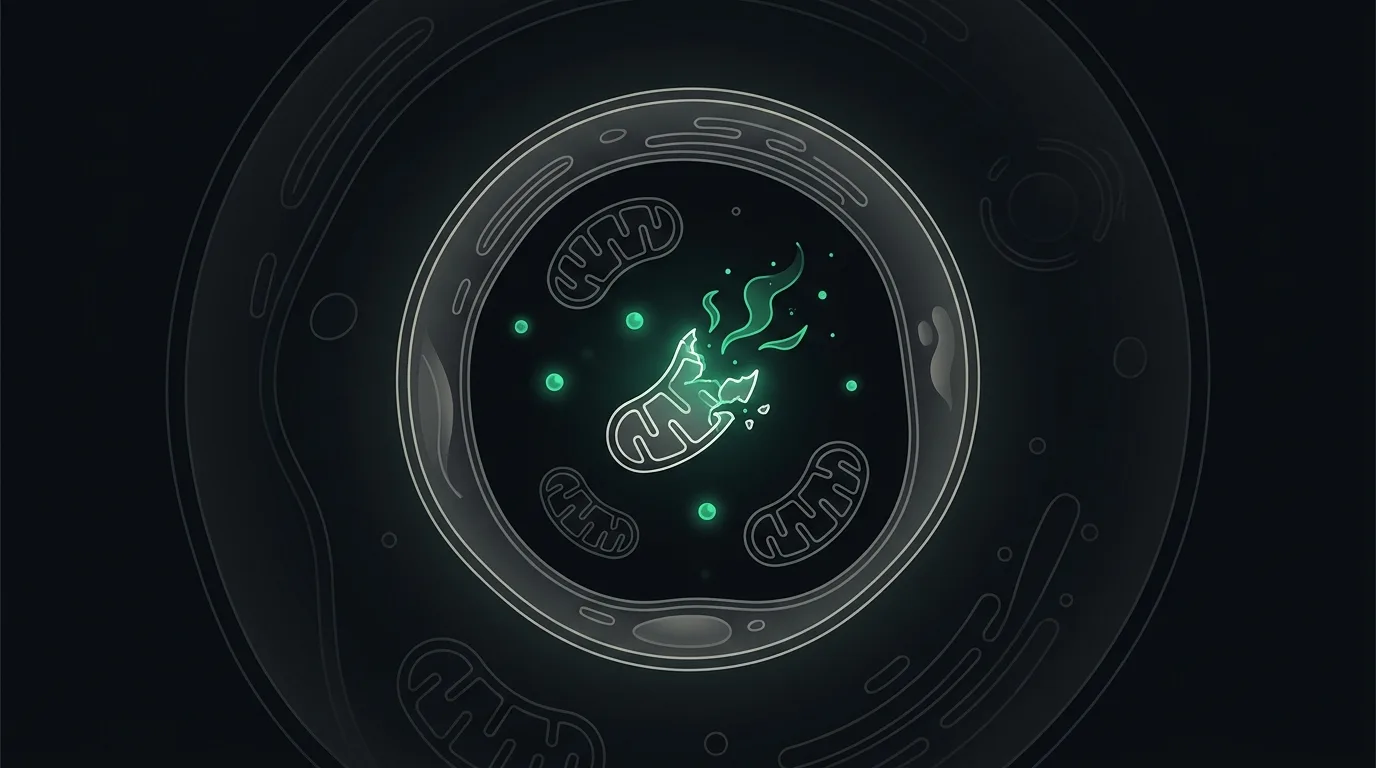
GLDH (glutamate dehydrogenase) is an enzyme found in liver cells, but with an important structural distinction from ALT: while ALT floats freely in the cell's cytoplasm, GLDH is held inside the mitochondria — the energy organelles deep within the cell. That location changes what a rise means.
GLDH sits inside liver-cell mitochondria, so it escapes only with more substantial injury than the surface leakage that raises ALT.
Because a cell must be more significantly damaged for its mitochondrial contents to escape, GLDH tends to rise with more substantial hepatocellular injury rather than with the mild, transient membrane leakiness that lifts ALT. It is also considered more liver-specific than ALT in some species contexts, with less contribution from muscle.
GLDH is measured routinely on many UK and European chemistry panels, and less commonly in the US — so whether you see it depends largely on where the sample was run.
Reading a high result
A raised GLDH indicates hepatocellular injury, and its mitochondrial origin means it carries a slightly different emphasis from ALT:
GLDH and ALT both raised — a coherent picture of liver-cell injury; the GLDH adds weight to it being genuine and reasonably substantial.
GLDH raised with a modest ALT — can suggest injury deeper than simple surface leakage, and is worth taking seriously.
Toxins, inflammation (hepatitis), reduced blood flow and certain metabolic insults are the usual drivers, much as for ALT.
As with every liver enzyme, GLDH reports damage, not function — a pet can have raised enzymes with a liver working perfectly well, or a failing liver with unremarkable enzymes. Function is judged by albumin, bilirubin and bile acids.
Reading a normal result
A normal GLDH is reassuring about significant ongoing hepatocellular injury, particularly alongside a normal ALT. As always, it does not exclude chronic or end-stage liver disease, where enzyme levels can be normal or low because fewer cells remain to leak.
In chronic disease
Followed over time, GLDH tracks the intensity of ongoing liver injury and complements the ALT trend. A GLDH that settles as an insult resolves is reassuring; one that stays up alongside ALT points to a persisting process worth investigating with imaging and, where indicated, biopsy.
Cat vs dog
GLDH is used in both species and interpreted along the same lines, with species-specific reference intervals. Its value as a complement to ALT applies to each. In cats, where any liver enzyme elevation carries more weight than in dogs, a raised GLDH deserves the same prompt attention that a raised ALP or ALT would.
About the reference range
This page shows no range strip. Pawline draws a band only where it holds a verified reference interval, and GLDH intervals are laboratory- and method-specific (and it is absent from many panels entirely). Read your result against the range printed on your own report.
For orientation only, one published example: Cornell University's veterinary laboratory reports GLDH of roughly 1–20 U/L in dogs and 0–12 U/L in cats. A practical consequence of the feline lower limit sitting at zero: a low GLDH in a cat carries no meaning (the assay can't distinguish normal from none), so only a raised value is informative. As ever, this is one lab's figure — your own report's range is what counts.
What to do next
A raised GLDH is interpreted as part of the liver panel — alongside ALT, ALP, GGT and bilirubin — and, where the picture warrants it, followed with bile acids to assess function and imaging to assess structure. Its particular contribution is confirming that hepatocellular injury is real and reasonably substantial rather than a trivial blip.
This page is educational and is not a diagnosis. Lab results are interpreted in the full clinical context by your veterinary surgeon; a single value rarely tells the whole story.